
The Importance of Backseat Gaming: Engaging as a Parent in Play
Transform "watching from the couch" into a powerful tool for family bonding by learning the art of constructive backseat gaming. This guide explores how parents can transition from passive observers to supportive teammates, using video games to foster emotional connection and sharper problem-solving skills. By mastering the balance between offering timely hints and respecting a player's agency, you can turn screen time into a collaborative learning experience. Discover practical scripts and "ask-before-acting" strategies that ensure your guidance is always a welcome addition to the adventure.
2/15/20263 min read
Understanding Backseat Gaming
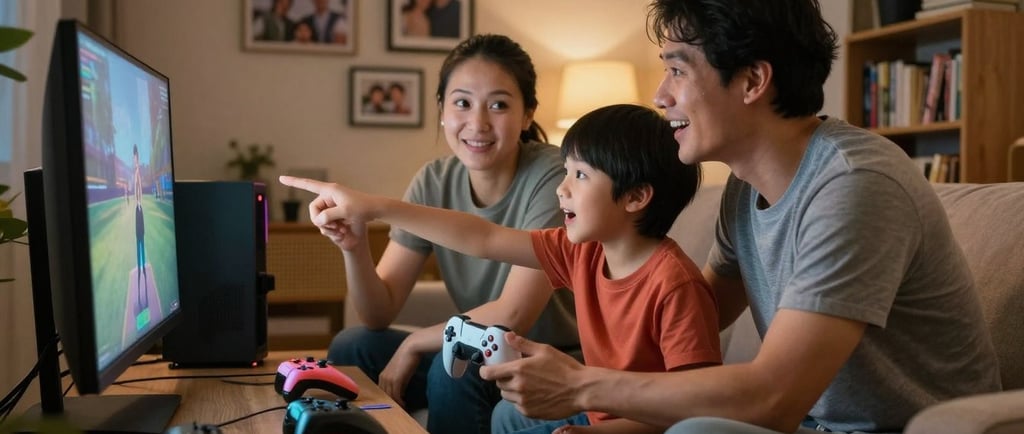
Backseat gaming means watching someone else play video games while offering gentle guidance, encouragement, or conversation—most often a parent watching a child or younger family member. When done thoughtfully, backseating becomes a way for parents to actively participate in their child’s gameplay, building connection and shared interests. For example, a parent might comment on strategy during a puzzle game or cheer after a tough level is cleared. Read the benefits below to see how constructive backseat gaming can help family bonding and learning.
Benefits of Backseat Gaming for Parents and Children
Backseat gaming can create meaningful opportunities for parental guidance and family bonding during shared gameplay. When parents offer encouragement or a timely tip while a child faces an in-game challenge, it fosters a supportive atmosphere that strengthens the parent-child relationship.
Specific benefits include:
Stronger emotional connection: Cheering a child through a difficult level or celebrating a small win reinforces positive feelings and trust between parent and player.
Improved problem-solving skills: When parents offer a hint or ask questions that prompt strategy (for example, “What would you try next?”), children practice flexible thinking and learn to evaluate options.
Better communication and empathy: Discussing decisions made during a game helps kids label emotions and receive constructive feedback, which supports emotional intelligence over time.
Insight into interests and abilities: Regular, respectful involvement gives parents firsthand information about the types of games their child enjoys and the skills they’re developing.
A 2019 review of play and development suggests that shared activities—like cooperative or observed gameplay—can support social and emotional learning when adults engage responsively (see sources on child development and play). That evidence supports the idea that thoughtful backseating, used sparingly and respectfully, can be beneficial rather than harmful.
Practical examples: when a child completes a tricky puzzle after a parent’s hint, both experience a sense of accomplishment; when a parent asks open questions about strategy, the child practices explaining their thinking—an important learning moment.
Next: how to participate effectively without overstepping—practical tips and scripts that help you backseat constructively.
How to Participate in Backseat Gaming Effectively
To get the most from backseat gaming, use clear, respectful strategies that support learning and preserve fun. Below are practical, age‑friendly approaches you can try the next time you watch someone else play.
1. Learn the game first
Spend a little time understanding the games your child enjoys—watch a trailer, read a short guide, or ask them to show you controls. Trying a tutorial level together or asking “How does this mechanic work?” signals genuine interest and makes your advice more useful.
2. Stay patient and give space
Allow kids to make mistakes and solve problems on their own when appropriate. Patience helps players build resilience and problem-solving skills; step in only when frustration rises or a teachable moment appears.
3. Intervene thoughtfully—ask before advising
Before offering tips, ask permission: “Want some advice?” If they say yes, give one short, specific suggestion (an example: “Try using cover here to avoid that enemy”). This kind of backseating keeps the focus on learning rather than control and preserves the player’s sense of agency.
4. Use positive reinforcement
Celebrate small wins—“Nice move!” or “You figured that out”—to reinforce progress. Positive comments help build confidence and make shared gameplay an enjoyable experience for both parent and player.
5. Respect boundaries in public or streamed play
If the playing game is being streamed or recorded, avoid public corrections that might embarrass the player. Private feedback, or simply supporting with cheering and encouragement, prevents negative attention and protects the child’s comfort on video or stream.
6. Tailor interaction by age and development
Younger children often benefit from simple guidance and praise; older kids may prefer strategy discussions or occasional challenges. For specific age-appropriate techniques, consult parenting resources on play and development to match your interventions to your child’s stage.
Quick scripts and tips
“Want a hint?” — gentle offer before advice.
“Tell me your plan” — invites explanation and reflection.
“Nice try—what would you do differently?” — encourages problem-solving.
Try these three actions during your next 30‑minute session: learn one game mechanic, offer one scripted hint only when asked, and celebrate at least one success. Note how these small changes affect the shared experience and your child’s willingness to accept advice.
Conclusion
In conclusion, backseat gaming is more than passive observation—it's a way for parents to join their children's games, offer thoughtful advice, and support learning through shared gameplay. When parents backseat with respect and restraint, the practice can strengthen communication, boost problem-solving, and deepen emotional bonds between parent and player.
Start small: pick one session per week to practice a single tip—learn one game mechanic, offer one scripted hint only when asked, and celebrate at least one success. Over time, these small actions can make family gaming a positive, shared experience rather than a source of tension.
Want a quick tool to get started? Share your experience in the comments below—your story can help others learn when backseating is helpful and when it's best to step back.